
Struggling to keep up with packed schedules across Greater Manchester, many health-focused professionals are finding that persistent tiredness and fading mental clarity are more than just signs of a busy life. Brain fog is a genuine cognitive challenge, not just simple forgetfulness or fatigue, and it can disrupt work, communication, and personal well-being in ways that demand deeper attention. This overview highlights what brain fog really means, clears up common misconceptions, and reveals smarter holistic strategies for restoring sharpness through advanced wellness practices.
Key Takeaways
| Point | Details |
|---|---|
| Understanding Brain Fog | Brain fog is a temporary cognitive state characterised by various disruptions in focus and memory, not a sign of permanent decline. |
| Key Contributing Factors | Chronic stress, hormonal changes, and medical conditions are primary contributors to brain fog, highlighting the importance of recognising triggers. |
| Impacts on Professional Life | Brain fog significantly affects workplace performance and relationships, leading to communication barriers and reduced efficiency. |
| Management Strategies | Implementing lifestyle changes, such as regular exercise, consistent sleep, and mindfulness practices, can effectively alleviate symptoms of brain fog. |
Defining Brain Fog and Common Misconceptions
Brain fog remains a complex, often misunderstood cognitive phenomenon that impacts thousands of professionals across the United Kingdom. Clinically described as functional cognitive disorder, it represents a constellation of cognitive disruptions that extend far beyond simple tiredness or occasional absent-mindedness.
The condition manifests through several distinctive symptoms that significantly interrupt daily functioning:
- Difficulty maintaining mental focus
- Memory lapses and recall challenges
- Disrupted thought processing
- Challenges with information organization
- Reduced mental clarity and sharpness
Brain fog is not a medically defined disease but rather a descriptive term capturing a range of cognitive challenges. Commonly associated with conditions like Long Covid and fibromyalgia, it represents a temporary cognitive state that fluctuates with stress, fatigue, and underlying health conditions.
Contrary to popular misconceptions, brain fog is not an indicator of permanent cognitive decline or early-onset dementia. Instead, it represents a dynamic neurological experience that can often be managed through targeted interventions, lifestyle modifications, and understanding one’s unique physiological triggers.
Brain fog is a legitimate cognitive experience that deserves recognition and compassionate management, not dismissal or minimisation.
Neurological research suggests that brain fog emerges from complex interactions between neurochemical, hormonal, and environmental factors. While it can feel overwhelming, professionals experiencing these symptoms should understand that it represents a temporary state, not a permanent condition.

Key Distinctions to Understand:
To help distinguish brain fog from other cognitive states, consider the following key comparisons:
| Aspect | Brain Fog | Dementia | General Tiredness |
|---|---|---|---|
| Duration | Temporary, fluctuates | Progressive, long-term | Short-lived, resolves with rest |
| Reversibility | Symptoms reversible | Symptoms often irreversible | Resolves with sleep or rest |
| Main Causes | Stress, illness, hormones | Neurodegeneration | Lack of sleep, overexertion |
| Cognitive Impact | Variable, non-permanent | Chronic, worsening | Mild, quickly relieved |
- Brain fog is temporary and reversible
- It does not indicate permanent cognitive impairment
- Symptoms vary in intensity and duration
- Multiple lifestyle and medical factors can contribute
_Pro tip:_ _Keep a detailed symptom journal to track brain fog triggers, helping you identify patterns and develop personalised management strategies._
Key Symptoms and Cognitive Difficulties
Brain fog represents a complex neurological experience with multifaceted cognitive challenges that can profoundly disrupt professional and personal functioning. Cognitive difficulties emerge through diverse neurological interruptions that impact mental processing, attention, and overall information management.
Individuals experiencing brain fog often encounter a range of distinctive cognitive symptoms:
- Significant concentration difficulties
- Memory recall challenges
- Slower information processing speeds
- Problems with executive decision-making
- Reduced ability to multitask effectively
- Challenges maintaining conversational focus
Specific cognitive symptoms can include extreme tiredness, dizziness, and impaired judgment, which collectively undermine an individual’s capacity to perform routine tasks with typical efficiency. These manifestations are not merely inconvenient but can substantially impact professional performance and personal interactions.
Neurological research reveals that cognitive difficulties associated with brain fog are not uniform but highly individualised experiences. Some professionals might struggle with information processing, while others experience more pronounced memory disruptions or attentional challenges.
Brain fog symptoms represent a legitimate neurological experience that demands understanding, not dismissal.
Critical cognitive domains most frequently impacted include:
- Attention and concentration
- Short-term memory functionality
- Executive function and decision-making
- Information processing speed
- Emotional regulation
These cognitive disruptions can create significant workplace challenges, potentially affecting productivity, communication, and professional confidence. Understanding these symptoms enables more compassionate self-management and targeted intervention strategies.
_Pro tip:_ _Develop a personalised cognitive support toolkit, including digital reminders, structured note-taking systems, and scheduled mental breaks to mitigate brain fog’s impact._
Causes: Stress, Sleep, Hormones, and Illness
Brain fog emerges from a complex interplay of physiological and environmental factors that can significantly disrupt cognitive functioning. Multiple medical conditions contribute to cognitive disruption, creating a nuanced landscape of potential triggers that extend far beyond simple fatigue.
Key physiological contributors to brain fog include:
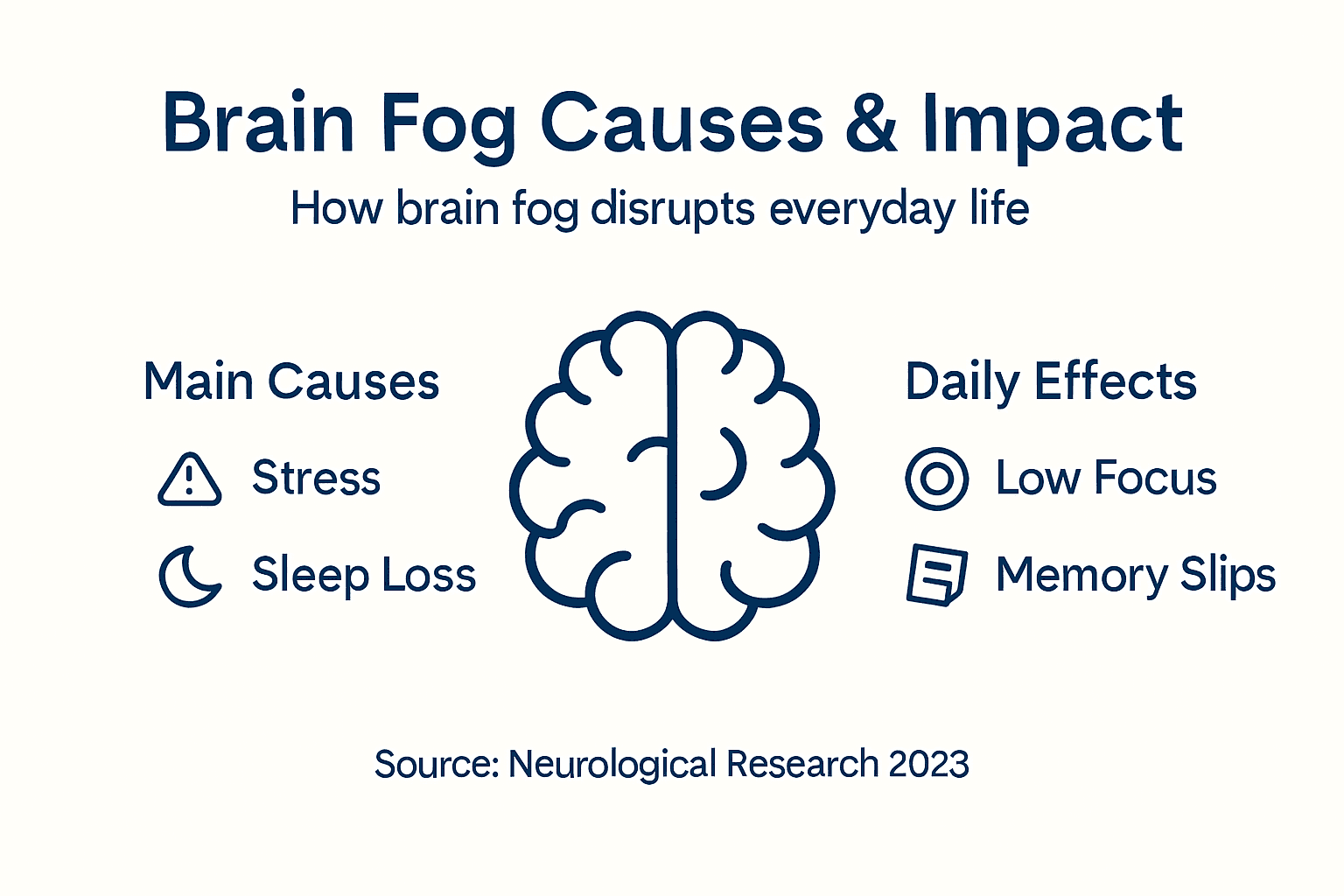
- Chronic stress and elevated cortisol levels
- Hormonal fluctuations
- Inflammatory responses
- Sleep disturbances
- Neurological conditions
- Autoimmune disorders
- Metabolic imbalances
Hormonal changes profoundly impact cognitive function, particularly during significant life transitions such as menopause. These shifts can trigger substantial neurological changes, including reduced grey matter volume and compromised mental health, which directly influence brain fog intensity and duration.
Stress mechanisms play a particularly critical role in brain fog development. Prolonged psychological strain triggers complex neurochemical responses, elevating cortisol and inflammatory markers that directly impair cognitive processing. Professionals experiencing consistent high-stress environments are especially vulnerable to these neurological disruptions.
Chronic stress does not just exhaust the mind—it fundamentally alters neurological functioning.
Critical illness-related factors that contribute to brain fog include:
- Long Covid symptoms
- Fibromyalgia
- Multiple sclerosis
- Chronic fatigue syndrome
- Neurological disorders
- Autoimmune conditions
- Hormonal imbalances
Understanding these interconnected mechanisms allows for more targeted, holistic approaches to managing and mitigating brain fog’s impact on daily functioning. Recognition of individual triggers becomes paramount in developing personalised intervention strategies.
_Pro tip:_ _Maintain a comprehensive symptom diary tracking stress levels, sleep quality, hormonal changes, and cognitive performance to identify your unique brain fog triggers._
How Brain Fog Affects Work and Relationships
Brain fog creates significant challenges in professional and personal environments, disrupting communication, productivity, and interpersonal dynamics. Cognitive impairments substantially impact workplace performance, creating complex obstacles for professionals navigating demanding work environments.
Professional challenges associated with brain fog include:
- Reduced task completion efficiency
- Difficulty maintaining professional communication
- Increased errors in complex tasks
- Slower information processing
- Compromised decision-making capabilities
- Reduced workplace confidence
- Higher levels of professional stress
Brain fog symptoms significantly disrupt social interactions and workplace relationships, creating potential misunderstandings and communication barriers. Professionals may struggle to articulate thoughts clearly, follow complex conversations, or maintain the rapid cognitive pace required in competitive work environments.
Emotional consequences of brain fog extend beyond immediate cognitive challenges. The persistent experience of mental confusion can lead to increased anxiety, reduced self-confidence, and potential social withdrawal. Relationships with colleagues, partners, and friends may become strained as individuals struggle to communicate effectively and maintain consistent engagement.
Brain fog is not a personal failing, but a legitimate neurological experience that requires understanding and compassionate support.
Relationship impact areas include:
- Reduced emotional communication
- Increased interpersonal misunderstandings
- Potential feelings of isolation
- Diminished social participation
- Higher relationship stress levels
- Potential professional reputation challenges
Recognising these multifaceted impacts helps individuals develop targeted strategies for managing brain fog’s professional and personal consequences. Proactive communication, self-compassion, and seeking appropriate support become crucial navigation tools.
_Pro tip:_ _Develop clear, concise communication scripts for professional and personal contexts to help navigate cognitive challenges and maintain relationship quality._
Evidence-Based Approaches to Reducing Brain Fog
Brain fog management requires a holistic, multifaceted approach that addresses underlying physiological and psychological factors. Strategic lifestyle interventions can significantly mitigate cognitive disruptions, empowering individuals to regain mental clarity and functional performance.
Evidence-based strategies for reducing brain fog include:
- Regular physical exercise
- Consistent sleep hygiene
- Stress reduction techniques
- Balanced nutritional intake
- Mindfulness and meditation practices
- Cognitive rehabilitation exercises
- Social engagement and mental stimulation
Cognitive health strategies involve comprehensive lifestyle modifications, focusing on maintaining mental plasticity and resilience. Key approaches involve integrating mental stimulation, physical activity, and structured cognitive support into daily routines.
Neurological research suggests that targeted interventions can help rewire neural pathways and improve cognitive functioning. These strategies go beyond symptomatic relief, addressing the fundamental neurological mechanisms contributing to brain fog.
Consistent, intentional lifestyle modifications can dramatically improve cognitive performance and mental clarity.
Practical implementation strategies include:
- Creating structured daily routines
- Implementing digital cognitive support tools
- Practising deliberate mental recovery techniques
- Establishing clear communication protocols
- Developing personalised stress management approaches
- Engaging in regular health monitoring
Understanding that brain fog is a complex, individual experience allows for more nuanced, personalised management approaches. Professional medical guidance remains crucial in developing comprehensive treatment strategies.
Below is a summary of practical brain fog management strategies and their expected benefit:
| Strategy | How It Helps | Best For |
|---|---|---|
| Consistent sleep routines | Improves cognitive restoration and clarity | Individuals with disrupted sleep |
| Mindfulness practices | Reduces stress and fosters mental focus | Those with high anxiety |
| Balanced nutrition | Supports brain health and energy levels | Anyone lacking dietary balance |
| Digital reminders | Compensates for memory lapses | Busy professionals with frequent tasks |
_Pro tip:_ _Design a personalised cognitive recovery toolkit with specific techniques, tracking mechanisms, and adaptive strategies tailored to your unique neurological profile._
Recharge Your Mind and Body to Combat Brain Fog
If brain fog is disrupting your focus, memory, and overall mental clarity, it is time to explore effective ways to reset your cognitive health. This article highlights how factors like chronic stress, hormonal imbalances, and disrupted sleep contribute to brain fog—challenges that can leave you feeling overwhelmed and disconnected from your best self.
At Float Therapy Wilmslow, our advanced floatation therapy offers a unique solution to these exact problems. By immersing in our sensory deprivation pods filled with medical-grade Epsom salts, you can experience deep mental restoration and stress relief, which are essential for alleviating brain fog symptoms. Complemented by our contrast therapy suite featuring a high-performance infrared sauna and cold plunge pool, you can reduce inflammation and boost dopamine levels to enhance focus and overall wellness.
Take control of your cognitive health today and discover how holistic treatments tailored for brain fog relief can improve your daily life. Visit Float Therapy Wilmslow and learn more about our floatation therapy and wellness services designed to help you regain mental clarity and emotional balance. Book your session now and start your journey toward sharper thinking and renewed energy.
Frequently Asked Questions
What are the main symptoms of brain fog?
The main symptoms of brain fog include difficulty maintaining mental focus, memory lapses, disrupted thought processing, challenges with information organisation, and reduced mental clarity.
How can brain fog impact daily life?
Brain fog can significantly disrupt both professional and personal life, leading to reduced task completion efficiency, difficulties in maintaining communication, increased errors in complex tasks, and strained relationships due to cognitive impairments.
What are some common causes of brain fog?
Common causes of brain fog include chronic stress, hormonal fluctuations, sleep disturbances, neurological conditions, autoimmune disorders, and inflammatory responses.
How can one manage or reduce brain fog?
Managing or reducing brain fog can involve strategies such as regular physical exercise, maintaining consistent sleep hygiene, practising stress reduction techniques, having a balanced diet, and engaging in mindfulness practices.