Stress in Wilmslow’s high-achieving culture often leaves your mind in overdrive long after the workday ends. For many professionals, genuine rest feels out of reach, while quick fixes rarely bring true clarity. Meditative stillness offers a way to become fully present and calm without escaping reality , teaching you to notice thoughts and sensations with acceptance instead of judgement. This guide explains the essential nature of meditative stillness and how floatation therapy can help you experience profound mental clarity and relaxation.
Key Takeaways
| Point | Details |
|---|---|
| Meditative Stillness Defined | It is a state of heightened awareness, focusing on present-centred awareness, non-judgmental observation, and equanimous attention. |
| Neural and Physical Benefits | Regular practice leads to measurable improvements in mental clarity, emotional regulation, and physical health, including reduced stress and anxiety. |
| Floatation Therapy Synergy | Floatation therapy enhances meditative stillness by providing an optimal environment for relaxation, free from distractions and physical discomfort. |
| Consistency is Key | Regular practice over time, rather than individual intensity, is essential for achieving lasting benefits and transforming your relationship with stress. |
Defining Meditative Stillness and Its Essence
Median stillness isn’t about empty silence or switching off your mind. It’s a state of heightened awareness where you’re fully present without judgment, observing your thoughts and sensations as they arise.
This might sound paradoxical. How can you be aware whilst remaining still? The answer lies in understanding what “stillness” actually means in a meditative context.
What Meditative Stillness Really Is
Meditative stillness encompasses three core elements:
- Present-centred awareness : You’re anchored in the here and now, not replaying yesterday’s missed deadline or worrying about next week’s presentation
- Non-judgmental observation : Thoughts, emotions, and physical sensations arise without criticism or resistance
- Equanimous attention : You maintain a calm, balanced perspective towards whatever emerges in your consciousness
Unlike passive relaxation, meditative stillness involves intentional regulation of mind and body that creates heightened awareness during the practice itself.
For someone experiencing chronic stress in Wilmslow’s competitive professional environment, this distinction matters enormously. You’re not trying to escape your reality; you’re learning to relate to it differently.
The Neural Shift During Practice
When you settle into meditative stillness, something remarkable happens neurologically. Your brain doesn’t simply relax—it undergoes measurable changes in how it processes information.
Present-centred awareness and acceptance represent the foundation of meditative practice across both traditional Buddhist teachings and contemporary psychology. This alignment across cultures and centuries suggests these aren’t arbitrary concepts but fundamental to human consciousness.
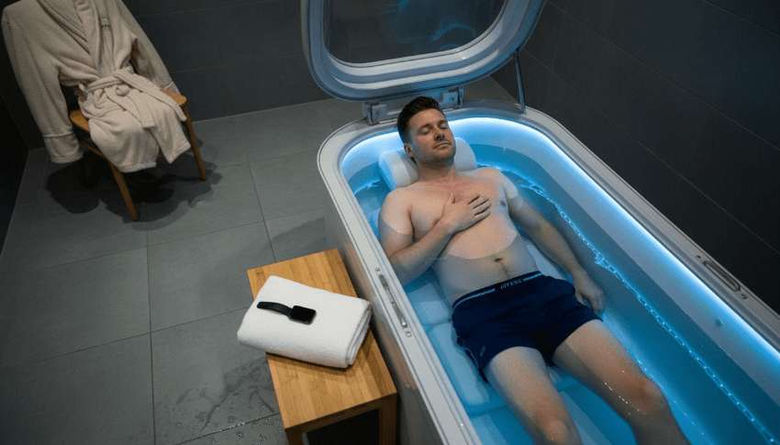
In our float pods at Float Therapy Wilmslow, you experience an ideal environment for cultivating this state. The sensory deprivation removes external distractions, whilst the medical-grade Epsom salt solution supports physical relaxation, allowing your mind to settle into genuine stillness.
Why This Matters for Your Wellness Journey
Median stillness isn’t a luxury add-on to your wellness routine. It addresses a critical gap in how most people in their late 20s through mid-40s navigate daily life.
Three reasons this resonates with health-conscious professionals:
- Your mind rarely experiences genuine rest; it’s perpetually processing notifications, decisions, and obligations
- Chronic low-level stress becomes your baseline, making you unable to recognise tension until it manifests as physical symptoms
- Mental clarity and emotional regulation directly impact decision-making, relationships, and physical recovery
Median stillness rewires your nervous system’s default response to stress. Rather than remaining in a heightened activation state, you train your body and mind to access deeper rest.
Meditative stillness is the practice of being fully aware whilst remaining internally calm—a state of conscious relaxation rather than unconscious escapism.
How It Differs From Sleep
Sleep is passive unconsciousness; meditative stillness is active awareness without mental noise. You remain conscious and alert, yet your thinking mind quiets significantly.
This distinction is crucial. When you emerge from a float therapy session, you don’t feel groggy or disoriented. Instead, you feel refreshed yet mentally sharp—your nervous system has genuinely rested whilst your consciousness remained present.
To illustrate how stillness in floatation therapy compares with other rest and recovery methods, consider the following table:
| Approach | Level of Awareness | Physical Environment | Typical Benefits |
|---|---|---|---|
| Floatation Therapy | Fully conscious | Sensory deprivation pod | Deep rest, mental clarity, muscle relief |
| Traditional Meditation | Fully conscious | Seated, normal environment | Gradual calm, focus, resilience |
| Sleep | Unconscious | Bed, any surroundings | Physical recovery, memory consolidation |
| Passive Relaxation | Mildly aware | Couch, spa, or home | Temporary ease, mild stress reduction |
_Pro tip:_ _Start with just 10 minutes of stillness during your float session, focusing on your breath and bodily sensations rather than trying to “achieve” anything. The absence of expectation is where genuine meditative stillness emerges._
Different Approaches to Achieving Stillness
There’s no single path to meditative stillness. What works brilliantly for one person might feel forced for another, and that’s entirely normal. The key is understanding which approach aligns with your temperament, schedule, and goals.
Some people gravitate towards structured techniques. Others prefer gentle, intuitive practices. Many find that combining multiple approaches creates the deepest results.
The Four Primary Pathways
Different routes lead to the same destination of inner calm:
- Breath-focused techniques : Anchoring attention to your breathing patterns to settle mental activity
- Body-scanning methods : Systematically moving awareness through physical sensations from head to toe
- Sensory awareness practices : Heightening attention to sights, sounds, or tactile experiences in your environment
- Thought-observation : Watching thoughts arise and dissolve without engaging or resisting them
Stillness as an active, existential practice differs fundamentally from passive relaxation. You’re actively training your attention rather than simply trying to feel calm.
This distinction matters. Active practice builds resilience and skill. Passive relaxation feels pleasant but rarely creates lasting change in how your nervous system responds to stress.
Structured Practices for Focused Minds
If you prefer clear instructions and measurable progress, structured approaches suit you well. These typically involve specific counting, timing, or sequential steps.
Mindfulness exercises like awareness practices and mindful pauses cultivate present-moment awareness whilst reducing mental agitation. The repetition builds neural pathways associated with sustained attention.
Within our float pods at Float Therapy Wilmslow, structure proves especially valuable. You might count your breath for five minutes, then shift to body scanning for ten minutes, finishing with open awareness.
This progression works because each stage builds upon the previous one. Your mind becomes progressively steadier through deliberate training.
Intuitive Approaches for Creative Types
Structured methods frustrate some people. If you find yourself resisting rigid frameworks, intuitive approaches offer freedom.
These involve settling into stillness without specific instructions, simply observing what naturally emerges. You might focus on whatever sensation captures your attention—perhaps the gentle pressure of salt water against your skin or the rhythm of your heartbeat.
Intuitive practice honours your natural inclinations rather than imposing external discipline. This often creates deeper relaxation because you’re working with your mind’s natural tendencies rather than against them.
Blended Approaches in Float Therapy
Many people discover that combining structured and intuitive elements produces optimal results. You might begin with a guided breath technique, transition to body scanning, then finish with open awareness.
Sensory deprivation tanks facilitate multiple techniques simultaneously. The absence of external stimulation removes distractions, whilst the buoyant environment supports physical relaxation.
This environment allows your attention to remain where you direct it without constant interruption from environmental noise or bodily discomfort.
Different approaches aren’t competing pathways—they’re complementary tools. The most effective practice is the one you’ll actually maintain consistently.
Finding Your Natural Style
Your preferred approach often relates to how your mind naturally operates. Analytical people often favour breath counting. Kinesthetic learners prefer body scanning. Visual thinkers might benefit from mental imagery.
The best approach is genuinely the one you’ll practise regularly. Consistency matters infinitely more than perfect technique.
_Pro tip:_ _Experiment with different techniques during successive float sessions, spending entire sessions exploring one method before moving to another. This builds genuine skill rather than superficial familiarity._
Physical and Mental Health Benefits Explained
Median stillness delivers measurable changes across your body and mind. These aren’t vague improvements you might imagine—they’re physiological and neurological shifts that research consistently documents.
Understanding these benefits transforms how you approach your wellness routine. You’re not simply relaxing; you’re actively rewiring your nervous system.
The Mental Health Transformation
Meditative stillness creates profound psychological shifts:
- Reduced anxiety : Your amygdala (fear centre) becomes less reactive to perceived threats
- Improved emotional regulation : You respond to challenges rather than react impulsively
- Enhanced mental resilience : Stress affects you less intensely and for shorter durations
- Better focus and concentration : Neural pathways supporting sustained attention strengthen significantly
- Decreased depression symptoms : Regular practice correlates with improved mood and motivation
Neural changes in brain networks supporting attention and emotion regulation occur gradually through consistent practice. Your prefrontal cortex strengthens its control over emotional responses.
For health-conscious professionals managing demanding careers, this rebalancing proves transformative. Rather than emotional reactivity driving your decisions, calm assessment becomes your default.
Physical Health Benefits You’ll Experience
Your mind and body aren’t separate systems. Mental stillness produces measurable physical changes within weeks of regular practice.
Blood pressure decreases. Cortisol (stress hormone) levels drop significantly. Heart rate variability improves, indicating better nervous system balance. Chronic pain intensity often reduces as your nervous system stops amplifying pain signals.
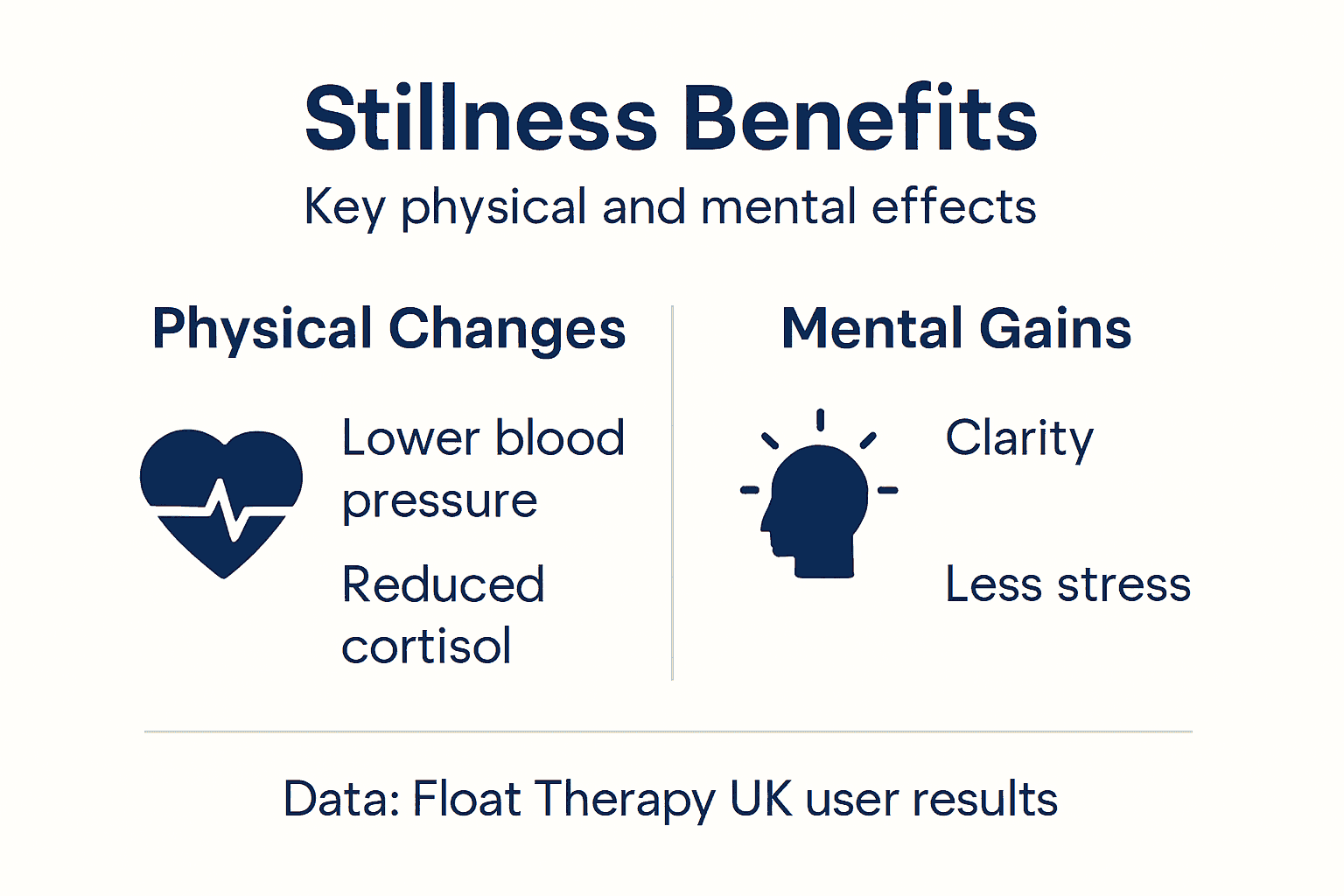
These changes accumulate progressively. One float session provides temporary relief. Consistent practice creates lasting physiological adaptation.
Within our float therapy environment, these benefits amplify substantially. The buoyant Epsom salt solution supports deep muscle relaxation. Sensory deprivation eliminates external stressors, allowing your parasympathetic nervous system to activate fully.
Recovery and Sleep Enhancement
Median stillness accelerates physical recovery between workouts and demanding work periods. Your body repairs and regenerates more efficiently when your nervous system isn’t perpetually activated.
Sleep quality often improves dramatically. Many people report falling asleep more easily and experiencing deeper, more restorative sleep cycles. This creates a positive feedback loop—better rest improves your capacity for stillness practices.
Pain Management Without Medication
Chronic pain often perpetuates itself through nervous system sensitisation. Your brain essentially “learns” to feel pain more intensely than the underlying condition warrants.
Median stillness interrupts this cycle. By calming your nervous system, you reset your pain perception baseline. Conditions like chronic headaches, lower back pain, and muscle tension frequently respond remarkably well.
The physical and mental benefits of meditative stillness compound over time. Consistency matters infinitely more than intensity or duration in any single session.
Cognitive Function and Clarity
Mental fog lifts noticeably. Decision-making becomes sharper. Creative problem-solving improves as your mind accesses broader perspectives beyond immediate stress responses.
Your working memory strengthens. You retain information more effectively and make clearer connections between ideas. For professionals managing complex projects, this cognitive enhancement translates directly into improved work performance.
Long-term Wellness Gains
Regular practitioners report sustained improvements in overall life satisfaction, relationship quality, and sense of purpose. These aren’t temporary effects—they represent genuine personality and perspective shifts.
_Pro tip:_ _Track your sleep quality, energy levels, and stress response over eight weeks of regular float sessions. Written records reveal improvements your mind might otherwise attribute to chance._
Here is a quick reference for the main mental and physical shifts you can expect over time with regular meditative stillness sessions:
| Timeframe | Mental Changes | Physical Changes | Lifestyle Impact |
|---|---|---|---|
| After One Session | Calmness, clearer thinking | Reduced muscle tension | Feeling refreshed |
| 2-4 Weeks | Better focus, less anxiety | Lower blood pressure, improved sleep | More resilience to stress |
| 2-3 Months | Emotional regulation, creativity | Chronic pain reduction, energy boost | Improved work performance |
| 6+ Months | Sustained mood, self-awareness | Enhanced immunity, stable recovery | Higher life satisfaction |
Integrating Floatation Therapy for Deep Rest
Floatation therapy creates an ideal environment for deepening meditative stillness. The combination of sensory deprivation and physical buoyancy removes barriers that typically prevent genuine deep rest.
Unlike meditation practised at home with ambient noise and physical tension, float pods eliminate these interruptions entirely. Your nervous system can finally access the parasympathetic activation it desperately needs.
Why Floatation Amplifies Meditative Stillness
Floatation therapy addresses multiple obstacles simultaneously:
- Sensory deprivation : Removes external stimuli competing for your attention
- Physical weightlessness : Eliminates gravitational strain on joints and muscles
- Temperature regulation : Keeps your body at optimal comfort without effort
- Magnesium absorption : Medical-grade Epsom salts support nervous system relaxation
- Minimal distractions : Creates a controlled environment where your mind naturally settles
Flotation-REST (Restricted Environmental Stimulation Therapy) demonstrates positive effects on pain relief, stress reduction, and anxiety management across numerous clinical studies. This isn’t anecdotal—the evidence base is substantial and growing.
For busy professionals in Wilmslow managing high-stress careers, floatation provides something meditation at home cannot: guaranteed uninterrupted time where your only responsibility is to rest.
The Unique Advantages of Float Pods
Median stillness in a float pod differs fundamentally from traditional meditation. You’re not fighting gravity, background noise, or the discomfort of sitting upright.
The Epsom salt solution at Float Therapy Wilmslow maintains precise buoyancy. Your body floats effortlessly, requiring zero muscular effort. This allows your nervous system to completely disengage from postural maintenance.
Your sensory field becomes dramatically quieter. Without visual stimuli, ambient sounds, or tactile distractions, your mind naturally orientates inward. This accelerates the transition into deeper meditative states compared to conventional practice.
Deepening Your Practice Over Time
Consistency transforms floatation from pleasant relaxation into genuine neurological training. Regular sessions—ideally weekly or bi-weekly—create cumulative effects.
Early sessions often feel purely physical: muscle relaxation, tension relief. After four to six sessions, mental benefits emerge more prominently. By twelve sessions, many practitioners report lasting changes in how they respond to stress outside the float pod.
Real-World Benefits Reported by UK Users
Survey data from regular UK floatation users consistently highlight relaxation, stress reduction, mental clarity, and improved sleep. Participants value floatation specifically for enhancing self-connection and emotional well-being.
These benefits extend beyond your float sessions. People report carrying the calm and mental clarity into daily life. Stress feels less overwhelming. Decision-making becomes clearer. Relationships improve as emotional reactivity decreases.
Integration Into Your Wellness Routine
Floatation therapy works beautifully alongside other wellness practices. Many people combine float sessions with contrast therapy, using our infrared sauna and cold plunge to enhance physical recovery.
Others use floatation as their primary meditation practice, eliminating home practice entirely. The flexibility depends on your lifestyle and goals.
Deep rest achieved in floatation therapy often requires zero additional effort from you—the environment does most of the work.
Creating Lasting Change
One float session provides temporary relief. Regular integration creates sustained nervous system recalibration. Your body gradually learns that genuine rest is possible, resetting your baseline stress response.
_Pro tip:_ _Schedule your float sessions at the same time each week, treating them as non-negotiable medical appointments rather than optional wellness activities. This consistency accelerates both immediate and long-term benefits._
Common Misconceptions and How to Avoid Them
Median stillness attracts unrealistic expectations. Social media showcases people in peaceful bliss whilst floating, creating false impressions about what you should experience.
Understanding common myths prevents disappointment and helps you approach floatation therapy with realistic, achievable goals. Your experience will be genuinely transformative—just not necessarily in the way you might imagine.
Myth 1: You Must Empty Your Mind Completely
This misconception stops countless people from engaging with meditative stillness. They believe success means achieving perfect silence and zero thoughts.
Reality differs significantly. Mindfulness is not strictly about meditation or emptying the mind, but rather observing whatever arises without judgment. Thoughts will emerge during float sessions. That’s entirely normal and doesn’t indicate failure.
Your goal isn’t thought suppression. Instead, you’re changing your relationship to thoughts—noticing them arise and dissolve without engaging. This skill develops gradually, not overnight.
Myth 2: Benefits Happen Instantly
One session won’t cure anxiety or eliminate stress entirely. Yet marketing around floatation sometimes suggests immediate transformation.
Actually, some benefits like stress hormone reduction lack conclusive evidence in early research. Other effects build progressively through consistent practice. Relaxation from your first float session feels pleasant but temporary.
Consistency matters infinitely more than individual session intensity. By week four or six, cumulative benefits become undeniable. Patience is the prerequisite.
Myth 3: Floatation Works the Same for Everyone
Some people feel profoundly altered after one session. Others require five sessions before noticing mental shifts. Both experiences are entirely valid.
Your nervous system responds on its own timeline. Factors like baseline stress, previous meditation experience, and even your sleep the night before influence each session. Comparing your experience to others guarantees disappointment.
_Pro tip:_ _Keep a simple journal tracking sleep quality, stress levels, and mental clarity before and after float sessions rather than chasing dramatic in-session experiences._
Myth 4: Floatation Is Only Spiritual or Woo-Woo
Median stillness integrates perfectly into secular wellness. The physiological benefits—reduced blood pressure, lower cortisol—occur regardless of your spiritual beliefs.
You don’t require spiritual commitment. You’re simply creating optimal conditions for your nervous system to access deeper rest. This is applied biology, not philosophy.
Myth 5: If You’re Busy, You Don’t Have Time
Actually, busy professionals benefit most from floatation. A single 60-minute float session provides nervous system recovery equivalent to several hours of home rest.
This efficiency makes floatation particularly valuable for health-conscious professionals managing demanding careers.
Myth 6: You’ll Feel Motivated Immediately
Some people emerge from float sessions feeling energised. Others feel deeply calm and somewhat unmotivated. Both are valuable, just different activation states.
The goal isn’t perpetual motivation. It’s nervous system balance where you access rest when needed and activation when required.
Your relationship with meditative stillness improves when you release expectations and simply allow whatever arises to arise.
Avoiding Disappointment Through Realistic Expectations
Accurate expectations include:
- Expect relaxation but not necessarily euphoria
- Expect gradual improvements rather than instant transformation
- Expect variation between sessions depending on life circumstances
- Expect to develop skills through practice rather than instant mastery
- Expect subtle emotional shifts before dramatic ones
Seeing floatation as a training process rather than a quick fix fundamentally shifts your experience. You’re investing in nervous system literacy, not purchasing temporary escape.
Experience True Meditative Stillness at Float Therapy Wilmslow
If you find yourself caught in the cycle of constant mental chatter and chronic stress, the concept of meditative stillness described in the article highlights a crucial challenge you face daily. The struggle to achieve present-centred awareness and emotional regulation amidst the demands of professional life can leave your nervous system perpetually activated and your body tense.
At Float Therapy Wilmslow, we offer an unparalleled solution to this problem. Our sensory deprivation pods filled with medical-grade Epsom salts create the perfect environment to cultivate meditative stillness through deep physical and mental relaxation. By reducing external distractions and supporting your body’s natural recovery, you can train your nervous system to access genuine rest, resilience, and clarity.
Discover how our advanced floatation therapy combined with contrast therapy featuring infrared sauna and cold plunge can accelerate your journey to mental calm and physical wellness. Take control of your stress response now and unlock the lasting benefits of meditative stillness. Visit Float Therapy Wilmslow to book your session and begin transforming your wellness routine today.
Frequently Asked Questions
What is meditative stillness and how is it different from traditional meditation?
Meditative stillness is a state of heightened awareness where you are fully present and observe your thoughts and sensations without judgment. Unlike traditional meditation, which can sometimes involve focused breathing or emptying the mind, meditative stillness emphasises conscious relaxation and active awareness.
How does meditative stillness benefit mental health?
Regular practice of meditative stillness has been shown to reduce anxiety, improve emotional regulation, enhance focus and concentration, and decrease symptoms of depression. This occurs as the brain undergoes changes that strengthen its response to stress over time.
Can floatation therapy enhance the experience of meditative stillness?
Yes, floatation therapy creates an optimal environment for meditative stillness by eliminating external distractions and promoting physical relaxation. The sensory deprivation involved allows your mind to settle more deeply, facilitating a quicker transition into meditative states compared to traditional practices.
How long should I practice meditative stillness for maximum benefits?
While immediate relaxation can be experienced after just one session, cumulative benefits appear with consistent practice. Aim for at least one session per week to observe significant improvements in mental clarity, emotional balance, and physical relaxation over time.